

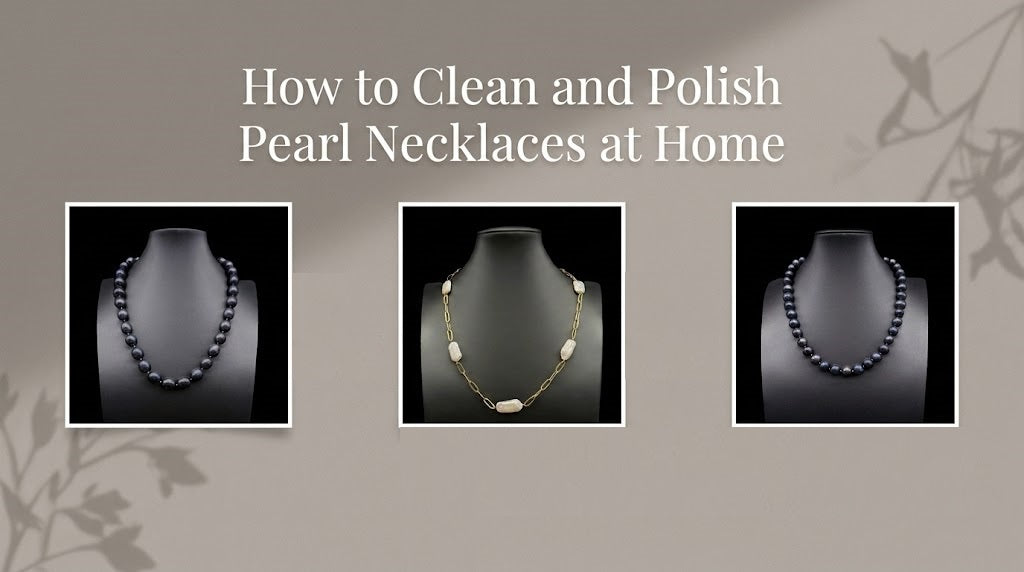

How to Clean and Polish Pearl Necklaces at Home
July 20, 2026 5 min read
Freshwater pearls are the softest gemstone most of us will ever own. On the Mohs hardness scale they sit somewhere between 2.5 and 4.5, well below a fingernail-scratching quartz crystal, which is exactly why the jewellery cleaner sitting under your bathroom sink can do more harm than good. One dunk in an ultrasonic cleaner, or a spray of perfume too close to the strand, and that soft nacre lustre you paid for starts to dull.
More Australians are buying pearl necklaces online these days rather than walking out of a jeweller with a care card in hand, which means plenty of us are left guessing how to actually look after them. It doesn't help that most “jewellery cleaning” advice floating around online is written for diamonds and gold, not for an organic gem that's still, in a sense, alive with moisture.
This guide sticks to what actually works on pearl necklaces specifically: proper at-home cleaning, the difference between cleaning and polishing, how to store a strand so it doesn't dry out or stretch, and when it's genuinely time to hand your necklace to a professional instead of persisting at the kitchen sink.
Why Pearl Necklaces Need Different Care to Other Jewellery
Most necklaces are metal and stone, both hard, both fairly indestructible day to day. A classic freshwater pearl necklace is different on two fronts. First, the pearls themselves are built from layers of nacre, a calcium-carbonate substance that's porous and happily absorbs oils, sweat and whatever chemicals happen to be nearby. Second, most strands are hand-knotted on silk thread, and silk weakens every time it gets wet or stretched. Treat a pearl necklace the way you'd treat jewellery generally, and you'll shorten its life considerably, sometimes within a single summer.
What You'll Need Before You Start
Nothing expensive, and nothing that isn't already sitting in most Australian bathrooms:
-
Two soft, lint-free cloths (microfibre or a clean, worn cotton t-shirt both work fine)
-
A small bowl of lukewarm water
-
A single drop of pH-neutral, fragrance-free soap – baby shampoo is the easiest to find
-
A dry towel to lay the necklace flat on while you work
Skip anything marketed as an all-purpose jewellery cleaner. If the label doesn't specifically say it's safe for pearls, leave it in the cupboard.
How to Clean a Pearl Necklace at Home, Step by Step
-
Lay the necklace flat on a towel before you do anything else, so if a knot does let go, the pearls don't roll straight off the bench.
-
Mix your bowl of lukewarm water with one drop of mild soap. You want it barely sudsy, not a bubble bath.
-
Dip one cloth into the solution and wring it out properly. It should feel damp, not wet.
-
Wipe each pearl individually, working along the strand rather than scrubbing back and forth. Turn the necklace as you go so you're not putting repeated pressure through the same knots.
-
Switch to your second cloth, dampened in clean water only, and go back over the strand to lift off any soap residue.
-
Lay the necklace flat to dry on a fresh towel for at least a couple of hours before you even think about putting it away.
The rule that matters more than any other: never submerge a knotted pearl necklace in water. It's the silk thread that suffers, not the pearls themselves, and a stretched or weakened thread is how you end up with loose pearls scattered across the floor.
How to Polish Pearls So They Actually Shine
Cleaning removes dirt and residue. Polishing is what brings the lustre back, and it's a separate step most people skip entirely. Once your necklace is completely dry, buff each pearl gently with a dry, soft chamois or microfibre cloth using small circular motions. That's genuinely the whole technique. Don't reach for silver polish, brass cleaner, or anything abrasive – all of it will strip nacre rather than shine it. If a strand still looks flat and chalky after a gentle buff, that's usually a sign it needs a professional clean rather than more elbow grease at home.
What About Pearl Earrings and Bracelets?
The same principles apply to any pearl earrings or pearl bracelets in your collection, with one small difference: without a silk thread to protect, you can afford to be slightly less cautious. A damp-cloth wipe after each wear and an occasional gentle clean with the same soap solution is enough. Just keep glued-in pearls, common in stud earrings, away from prolonged moisture, since the adhesive can weaken over time.
Storing Your Pearl Necklace Between Wears
Australian homes tend to run drier and hotter than pearls would ideally like, particularly through summer, so where you store a strand matters almost as much as how you clean it.
-
Store it flat, not hanging, so the thread doesn't stretch over time
-
Use a soft, breathable pouch or fabric-lined box – never an airtight container or sealed plastic bag
-
Keep it away from direct sunlight and heat sources, including a car glovebox or a sunny windowsill
-
Store pearls separately from harder gemstones and metal jewellery that could scratch the nacre
-
Wear them reasonably often – pearls benefit from the humidity of being worn against skin, so a necklace shut away for years tends to dry out faster than one worn a few times a month
Common Mistakes That Dull Pearls Fast
A handful of habits account for most of the “why has my pearl necklace gone yellow and dull” questions we hear:
-
Putting the necklace on before perfume, hairspray or makeup instead of after
-
Cleaning with vinegar, lemon juice or any acidic solution, which will visibly etch the nacre
-
Using an ultrasonic or steam jewellery cleaner – fine for diamonds, disastrous for pearls
-
Swimming or showering while wearing them, since chlorine and salt water both degrade the nacre and the thread
-
Leaving a strand knotted away in a drawer for months without ever checking on it
When to See a Professional Instead
Home cleaning covers day-to-day maintenance, but it isn't a substitute for proper servicing. Book your necklace in with a jeweller if the thread looks stretched or discoloured, if knots have loosened enough that pearls can slide along the strand, or if it's simply been worn regularly for more than a year or two without a restring. As a rough rule, a well-worn pearl strand should be restrung roughly every 12 to 24 months, sooner if you can see or feel any give in the silk.
Frequently Asked Questions
Can I clean pearls with vinegar or lemon juice?
No. Pearls are made largely of calcium carbonate, and even mild acids will dissolve the surface of the nacre. Stick to lukewarm water and a trace of pH-neutral soap.
How often should I clean a pearl necklace?
A quick wipe with a dry cloth after each wear is enough for everyday maintenance. A proper damp clean is only needed every few months, or whenever the strand looks like it's picked up oils or makeup.
Can pearl necklaces get wet at all?
A light damp wipe is fine. Full submersion, showering or swimming in them isn't, because it's the silk thread holding the strand together that takes the damage, not just the pearls.
Subscribe
Sign up to get the latest on sales, new releases and more …